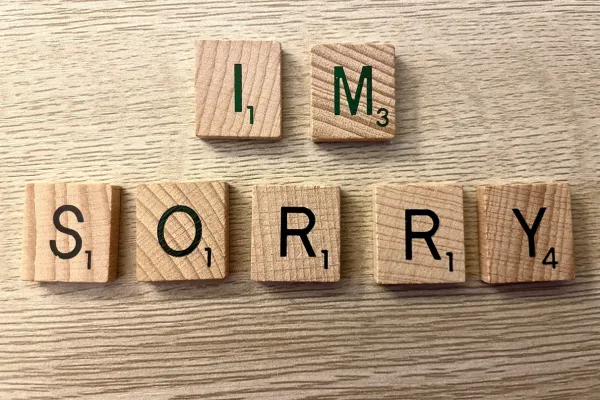
Stop Over Apologising at Work: What to Say Instead (Without Losing Kindness)
Why do I keep starting sentences with “I’m sorry” at work?
For many people, “I’m sorry” is a reflex.
We use it to be kind, soften tension, and show responsibility. The problem is, that constant apologies can diminish the power of what we say next. Your suggestion can sound uncertain, and your idea can land like an inconvenience, even before you’ve said it.
That habit often comes from good intent: you want to diffuse conflict before it starts. However, in workplaces, “sorry” can unintentionally send a message that you’re interrupting, imposing, or not fully entitled to contribute. Over time, it can diminish the impact of your message, especially when you’re asking, proposing, or following up.
Does over‑apologising really make me sound less confident?
Yes.
This is because the apology becomes a headline for your sentence. When you lead with “I’m sorry,” listeners often hear hesitation first and substance second. That can make your suggestion feel like it lacks conviction or your idea feel like extra work for others, even when it’s valuable.
This isn’t about becoming blunt, overconfident or aggressive. It’s not about dropping politeness either. This is about being assertive, that is, communicating what you want and need in order to do your job. It’s about choosing language that matches your intent. If the goal is collaboration, clarity, or moving forward, you can keep the warmth, without reducing your own authority in the room.
When should I apologise at work (and when shouldn’t I)?
Some situations genuinely warrant an apology, like being late to a meeting (respect people’s time) or making a mistake (own it and explain how you’ll prevent it next time). In those moments, “I’m sorry” is appropriate because it acknowledges impact and responsibility.
But many everyday moments do not require an apology. Asking for help, suggesting a new idea, or chasing an aggressive goal aren’t offenses. They’re part of doing your job, and contributing.
What should I say instead of “I’m sorry” when I’m asking for help?
Swap the apology for a clear, collaborative request. Instead of making your need sound like a burden, name what you want and invite support. That keeps the interaction respectful while protecting the confidence behind your ask.
Try:
“I’d love your help.”
“I’d love your insight on…”
You’re not “sorry to ask.” You’re doing the work, together.
What can I say instead of “Sorry, this is confusing”?
When something isn’t clear, an apology can accidentally take on blame or imply you’re in the wrong for asking. A stronger approach is to steer the conversation toward clarity, because clarity benefits everyone.
Try:
“Let me clarify.”
It keeps the focus on understanding and progress rather than creating a persona of self‑doubt.
What do I say instead of apologising for a delay or follow‑up?
Following up is part of delivering on the work. If you apologise every time, you check in, it can make your request seem optional. or inconvenient. A more grounded alternative acknowledges the moment without shrinking your purpose.
Try:
“Appreciate your patience.”
“When can we meet on this?”
“Let’s connect on this next week.”
You’re not “bothering.” You’re moving work forward.
How do I disagree without saying “Sorry” first?
Disagreement doesn’t automatically mean you’re disrespecting someone. If you lead with “I’m sorry to disagree,” you may undercut your contribution before it’s heard. You can offer a different view without apologising for having it.
Try:
“I have another idea.”
It sends a message of participation, not permission-seeking.
What’s the simplest rule to stop over‑apologising?
Only apologise when an apology fits the situation. For example, lateness, mistakes, and moments where accountability is required. Otherwise, choose language that reflects your role, such as contributor, teammate, decision‑maker, problem‑solver.
You earned your seat at the table. Don’t apologise for being there.
FAQ
How do I stop saying “sorry” in emails and chat messages?
Notice your default openers and replace the apology with a direct, respectful alternative like “I’d love your help,” “Let me clarify,” or “Appreciate your patience.” Keep the tone kind but remove language that diminishes what you’re about to ask or propose.
What do I say instead of “Sorry to follow up”?
Use forward-moving language: “When can we meet on this?” or “Let’s connect on this next week.” These keep your follow‑up purposeful and professional without making your request sound like an inconvenience.
Is it rude not to apologise when asking questions?
Not at all. Asking questions and seeking clarity are normal parts of work. Instead of apologising, use “Let me clarify,” or ask directly. Respectful doesn’t require self‑minimising.
What do I say instead of “Sorry, I can’t meet”?
Choose a confident, practical next step: “Let’s connect on this next week.” You’re not apologising for having boundaries, you’re offering an alternative that keeps momentum.
When is “I’m sorry” the right choice at work?
When you’re late (respecting others’ time) or when you made a mistake (owning it and explaining how you’ll prevent it in the future). In those cases, an apology signals responsibility and repair.
What's Next?
If you are leader wanting to improve your leadership capabilities or a HR professional wanting to improve capabilities of you leadership team, I can provide you a free strategy session to find solutions that work for you or your team. Book Your Call Here
Check out our upcoming free masterclasses that focus on how to Feel Good at Work, how to work Better Together, Talk Smart (communication techniques), Mission Control (leadership techniques), Essential Human Skills, and how to Tame Your Time.
Want more like this?
We send the odd useful email with content like this. If you'd like more like useful tools, tips and advice, subscribe here.
